October 30, 2026 | Corporate & CommercialThe India–New Zealand Free Trade Agreement marks a significant milestone in strengthening bilateral economic relations and deepening trade and investment ties between the two countries. It creates a new framework for cross-border collaboration, market expansion and long-term economic growth, opening up fresh possibilities for businesses in India and New Zealand to explore emerging opportunities and strengthen their global presence.
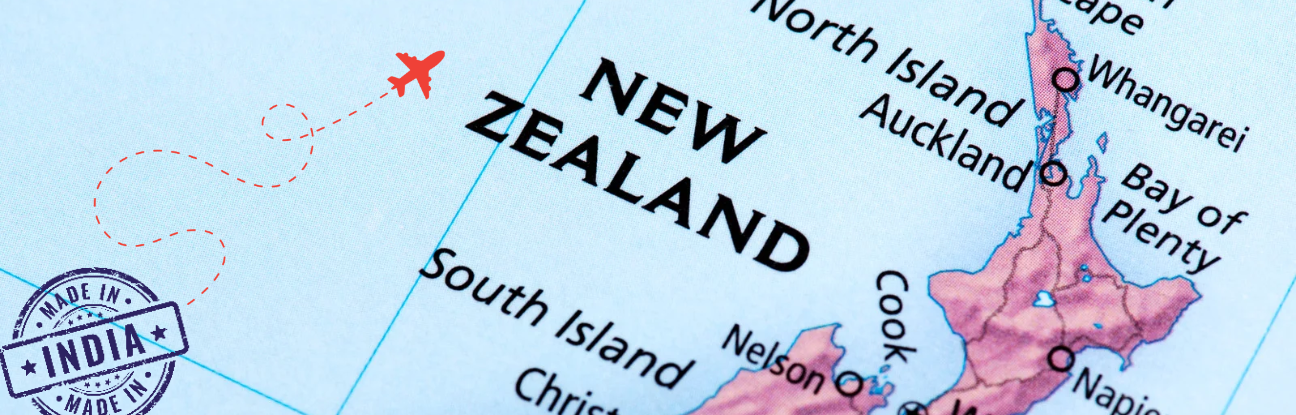

With the India-New Zealand Free Trade Agreement (FTA) having entered into force on October 20th, 2026, the economic corridor between the two nations is experienced a profound structural shift . Formally ratified by both governments on September 21, 2026, and having been cleared by the New Zealand Parliament, the agreement seeks to move beyond mere tariff deductions and provide a comprehensive investment corridor for both nations. For businesses operational in both states, the economic landscape now offers immediate expansion opportunities and long term capital deployment.
Beyond the tariff schedule, the agreement introduces mechanisms designed to attract investment and bypass red tape.
Investments: The agreement sets an objective for New Zealand to facilitate USD 20 billion in foreign direct investment into India over the next 15 years. This investment is directed towards startups, women enterprises, emerging technologies, and MSMEs. There will also be a formal review mechanism designed to function as a checkpoint to understand the long term benefits of the FTA in boosting the export capacity and competitiveness of Indian MSME’s along with uptake of technologies.
Pharmaceutical Recognition: Indian pharmaceutical and medical device manufacturers gain a significant time-to-market advantage. New Zealand will now accept Good Manufacturing Practice and Good Clinical Practice certifications from established regulators in countries such as the US with the FDA, EU’s EMA, UK MHRA as valid in New Zealand without the pharmaceuticals having to be re certified in the country, preventing duplication in compliance.
Recognizing that deep economic integration requires the movement of people, the FTA establishes robust, predictable pathways for skilled professionals and students.
Dedicated Professional Visas: The agreement creates an allowance for up to 5,000 skilled Indian professionals to reside and work in New Zealand for up to three years. This quota includes allocations for high-demand sectors: 1,200 visas for healthcare workers, 1,000 for IT professionals, and 1,000 for engineers.
Post-Study Pathways: The agreement provides uncapped student mobility with work rights of up to 20 hours per week, taking inspiration from similar benefits provided to Indian students by the UK separate from the FTA . Upon graduation, Indian students secure post-study work rights for up to three years, or four years for doctoral scholars.
The activation date for the FTA is approaching and with it, the expectation that the Agreement will be activated to its full capacity throughout its lifetime. Along with increasing the resilience of suppliers and allowing them to scale up to newer certification standards, it would also mark a bellwether for how well MSME’s and businesses in India can understand and re – orient themselves to a newer set of Rules of Origin and of even more importance – a newer market. The India-New Zealand FTA delivers immediate relief for exporters and regulatory alignment for industries. With the Indian Central Government having officially notified the "Customs Tariff (Determination of Origin of Goods under the Free Trade Agreement between India and New Zealand) Rules, 2026" on October 14, businesses can now utilise the framework which was needed to claim tariff concessions.
India Law Offices LLP stands at the forefront of these market changes. With our deep seated expertise in facilitating cross border trade and investments along with assisting our clients in becoming ready to take advantage of trade agreements, we are well suited to augment and assist under the India – New Zealand FTA as well. Rules of Origin,
Customs Facilitation, Disputes along with Certification are just some of the few capabilities the firm has to offer to partners looking to expand their horizon to Oceania and beyond.
 Thank you for getting in touch!
We appreciate you contacting us at India Law Offices. We will review the details that you have submitted and one of our experts will connect with you shortly.
Here are some of the other related articles authored by our experts which might be of interest to you.