August 24, 2026 | Corporate & CommercialThe India–Oman CEPA opens new opportunities for Indian businesses through preferential tariffs, greater services access, investment opportunities and enhanced market access. This article explores the key provisions of the agreement and how Indian companies can leverage Oman as a strategic gateway to the wider GCC market.
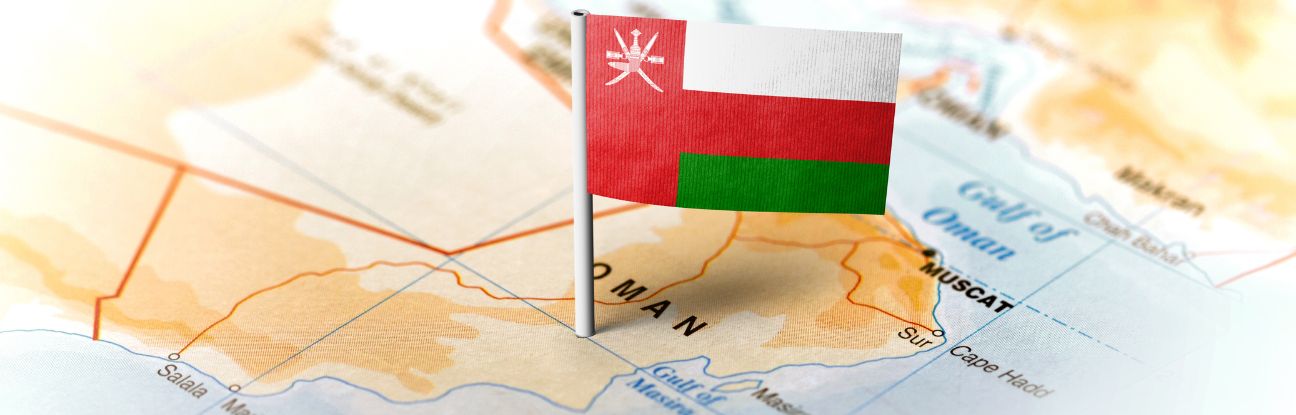

The India Oman CEPA entered into force on the 1st of June 2026, marking the creation of a Free Trade Area between the two nations. Beyond opening tariff and export lines to boost trade volumes, CEPA stands as a strategic milestone for the two nations in vastly different ways.
For Oman, this marks it first FTA with a trading partner apart from the United States of America and for India, it provides a geographically strategic springboard for enterprises looking to expand in the GCC countries and explore alternative transit routes bypassing the highly volatile Strait of Hormuz.
Bilateral economic engagement between India and Oman expanded rapidly before the pact, reaching a trade volume of USD 10.61 billion in FY 24-25 and climbing to USD 11.18 billion in FY 25-26. India was a net importer of Omani goods as compared to its exports, driven by its status as the world’s fastest growing major economy and demand for Omani urea, fertilizers, oil and petrochemical inputs. With an estimated total of 6000 India – Oman joint ventures contributing approximately USD 7.5 billion to Oman’s domestic economy, the CEPA intends to provide a robust institutional framework to scale these partnerships and deepen trade ties between the two countries. Oman’s decision to execute the CEPA marks its first bilateral trade deal since 2006 and only its second country specific trade deal or agreement. Spanning 16 specialised chapters and annexures, the agreement provides much needed trade resilience for Indian exporters by providing much needed duty free and direct access to ports located in Salalah and Duqm. These ports serve as strategic duty-free hubs, providing an alternative trade route to the vulnerabilities surrounding the Strait of Hormuz.
Under the CEPA, Oman has committed to eliminate duties on 98.08% of its tariff lines, directly covering an equivalent of 99.38% of India’s export value to the Sultanate on Day 1. Prior to the CEPA, exporters faced a standard Most Favoured Nation (MFN) treatment of 5-15% duties. The agreement eliminates these duties and aims to deliver tariff advantages over non-FTA competitors.
The benefits for India accrue across sectors:
India opened 77.79% of tariff lines (94.81% of import value), granting duty-free access to Omani inputs like petrochemicals, fertilizers, aluminum, and minerals to lower domestic costs. However, India excluded sensitive sectors to protect domestic industries, keeping dairy, grains, edible oils, tobacco, bullion, and footwear restricted.
Beyond physical trade, CEPA delivers Oman’s most expansive services liberalization concession ever afforded to a bilateral trade partner. It opens 127 sub-sectors, unlocking committed access for Indian service providers to fields such as engineering, healthcare, higher education, financial services and legal consultancy.
Professional mobility receives a major upgrade with benefits aimed across sectors –
These changes are expected to minimize holding time and compliances in high value exports to Oman, providing Indian businesses with a substantial advantage over non-FTA competitors and positioning them favorably in critical sectors.
To convert CEPA preferential treatment into actual realized gains, businesses would need to deploy differentiated strategies across target streams from exports to imports:
The entry into force of the India Oman CEPA represents a pivotal moment in both countries trade relationships and volumes. It is a structural turning point in Indian and Middle Eastern trade integration. Access to the wider GCC market through Omani Ports allows for uninterrupted trade flows along with establishing Indian exports as more competitive than the non-FTA signatories. For industries and enterprises, maximizing this pact will now depend on swift operational execution and mastering the compliance and origin rules to build durable regional footprints.
India Law Offices LLP assists Indian businesses with cross-border expansion, investments and commercial opportunities arising from the India–Oman CEPA. We work extensively with our partner law firm in Oman, enabling us to provide coordinated legal and regulatory support in India and Oman, including market entry, local compliance, investment structuring and commercial transactions.
Our assistance includes:
CEPA Advisory & Eligibility Assessment – Assessing tariff benefits, rules of origin and market-access provisions.
Oman Market Entry & Expansion – Advising on subsidiaries, JVs and other market-entry structures.
Cross-Border Transactions – Supporting investments, acquisitions, JVs and strategic partnerships.
Trade & Regulatory Compliance – Advising on customs, documentation and applicable regulatory requirements.
FDI, FEMA & Foreign Investment Advisory – Supporting Indian businesses establishing or investing in Oman.
Commercial Agreements – Drafting and reviewing supply, distribution, agency and other commercial agreements.
GCC Expansion Strategy – Helping Indian businesses use Oman as a platform for wider GCC expansion.
 Thank you for getting in touch!
 We appreciate you contacting us at India Law Offices. We will review the details that you have submitted and one of our experts will connect with you shortly.
Here are some of the other related articles authored by our experts which might be of interest to you.