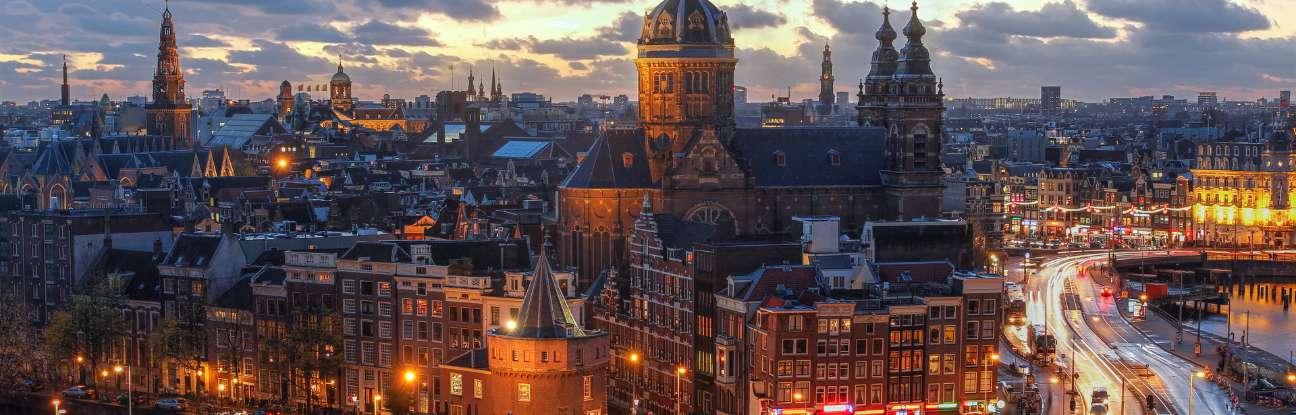
The Netherlands, with Amsterdam as its capital, is a nation known for its rich cultural heritage and diverse population. Dutch is the official language, with Frisian recognized in Friesland, while English is widely spoken and understood across the country. As of 2022, the Netherlands is home to approximately 17.6 million people, comprising various ethnicities, including Dutch, Turkish, Moroccan, Surinamese, and Indonesian communities. The population growth rate stood at around 0.3% in 2021, according to Statistics Netherlands, within an area covering approximately 41,543 square kilometres. Geographically, the Netherlands is situated in North-western Europe, bordered by Germany to the east, Belgium to the south, and the North Sea to the northwest. Its iconic flat landscape, extensive canal systems, and windmills contribute to its unique charm. The currency used in the Netherlands is the Euro (EUR), facilitating economic transactions within the country and across the European Union. With its blend of cultural diversity, thriving economy, and strategic location, the Netherlands remains a dynamic and vibrant hub in the heart of Europe.
Economic Overview
In 2023, the Dutch economy faced challenges, experiencing a slowdown with GDP growth at 0.2%. However, there are expectations for a gradual recovery, with GDP projected to increase to 0.5% in 2024 and 1.1% in 2025. Despite tight labour market conditions, core inflation is expected to remain high at 3.9% in 2024 before gradually declining to 2% by 2025. The fiscal stance is projected to be mildly restrictive, with concerns about a deteriorating fiscal deficit due to rising expenditures on interest, climate policy, and healthcare. The economic challenges in 2023 included a contraction in the initial three quarters driven by declines in trade balance and household consumption. Despite falling energy and food prices, core inflation remained high at 4.7%, attributed to rising wage rates and labour market tightness. Private consumption remained subdued with stable but below-average consumer confidence, while business confidence deteriorated, leading to a 9.3% contraction in industrial sector production. The Netherlands, despite its small size, is strategically located with over 170 million consumers within a 300-mile radius. Leveraging advanced infrastructure like Rotterdam port and Amsterdam Schiphol Airport, it has become a key centre within the global business network. With a GDP close to $1 trillion in 2022, it ranks as the seventeenth largest economy globally and the fifth largest in the Eurozone. The bilateral relationship between the United States and the Netherlands remains robust, with the US being the largest foreign investor and maintaining a significant trade surplus.
Bilateral Relations between India-Netherlands
India and the Netherlands have enjoyed diplomatic relations since 1947, marking 75 years of ties in 2022. Their relationship spans robust political, economic, and commercial exchanges, with frequent high-level engagements enhancing their partnership. The Netherlands ranks as India's fourth-largest trading partner in Europe and the fourth-largest investor in the country. Bilateral trade surged to USD 27.58 billion in the fiscal year 2022-23, with cumulative FDI from the Netherlands to India totalling USD 43.75 billion from April 2000 to March 2023, showcasing significant investment collaboration.
Taxation
The Netherlands implements a progressive income tax system, with rates ranging from 37.1% to 49.5% for individuals based on income brackets. Corporate income tax stands at 25%, with variations for different profit levels. The standard VAT rate is 21%, while dividends are subject to a 15% withholding tax. Capital gains from shares are usually tax-exempt, but real estate sales incur a 25% tax. Inheritance and gift tax rates vary, and property owners face municipal taxes like property tax and sewage charges, varying by municipality and property value.
Financing Business in Netherlands
Dutch businesses in the Netherlands have access to diverse financing options to support their growth and operations. Traditional bank loans from institutions like ING, ABN AMRO, and Rabobank cater to different business sizes and needs. The country's venture capital ecosystem is thriving, with firms like Prime Ventures and INKEF Capital investing in high-growth companies. Angel investor networks, such as the Dutch Start-up Association, facilitate early-stage funding and mentorship. Crowdfunding platforms like Symbid and Crowdcube Netherlands offer alternative funding avenues by pooling small investments from individuals. Moreover, the Dutch government provides grants and subsidies for research, innovation, and sustainable business practices through initiatives led by the Ministry of Economic Affairs and Climate Policy.
Top 10 Companies in Netherlands – 2023
| Rank |
Company |
Industry |
Revenue in 2023 (USD) |
| 1 |
Exor |
Insurance |
$ 223.32 B |
| 2 |
Stellantis |
Automotive Manufacturing |
$ 101.32 B |
| 3 |
Ahold Delhaize |
Retail |
$ 96.19 B |
| 4 |
Airbus |
Aircraft Manufacturing |
$ 67.95 B |
| 5 |
Heineken |
Beverages |
$ 30.75 B |
| 6 |
ASML |
Technology |
$ 29.90 B |
| 7 |
Randstad |
Professional Services |
$ 27.58 B |
| 8 |
NN Group |
Insurance |
$ 22.44 B |
| 9 |
ING |
Banks and Financial Services |
$ 21.84 B |
| 10 |
Philips |
Electronics |
$ 19.72 B |
Business Clusters in Netherlands
- Rotterdam-The Hague Metropolitan Area: This hub is a leader in logistics, transportation, and maritime industries, boasting Europe's largest port in Rotterdam and hosting governmental institutions in The Hague.
- Amsterdam Metropolitan Area: Amsterdam is a diverse business hub with industries spanning finance, technology, and life sciences, benefitting from its proximity to Schiphol Airport.
- Brainport Eindhoven: Known for innovation, Brainport Eindhoven focuses on high-tech industries like electronics, automotive, and design in the southern Netherlands.
- Food Valley: Wageningen and surroundings form a renowned centre for agri-food research and innovation, with a focus on food technology and sustainable agriculture.
- Utrecht Science Park: This ecosystem is dedicated to life sciences, health, and sustainability, housing universities, research institutes, and biotech companies.
- Greenport West-Holland: Specializing in greenhouse cultivation and floriculture, this cluster in Westland drives innovation and sustainability in horticulture.
- Chemelot Campus: A leading hub for chemical and materials industries in Limburg, housing research institutes and companies in chemistry and biotechnology.
- Leiden Bio Science Park: One of Europe's largest life sciences clusters, Leiden is home to pharmaceutical and biotechnology companies.
- Twente Region: Known for its high-tech industry, Twente focuses on advanced manufacturing, ICT, and engineering.
- Delft Innovation District: Hosts universities and companies specializing in aerospace, robotics, and sustainable energy in Delft.
- Horti Cluster Westland: A hotspot for greenhouse horticulture, Westland's cluster focuses on greenhouse technology and sustainability.
- Arnhem-Nijmegen Region: A hub for energy and environmental technology, this region specializes in renewable energy and circular economy solutions.
Starting a Business in Netherlands
When starting a business in the Netherlands, selecting a unique business name is vital, following Dutch regulations. Freelancers often register a distinct business name, which requires verifying its availability through the Dutch Chamber of Commerce's commercial register or the Benelux Office for Intellectual Property (BOIP). To register, applicants must complete a Dutch registration form and attend an appointment at the Chamber of Commerce (KvK), bringing €50 for the fee, identification documents, and proof of business knowledge. Additional documents may be needed based on the business type. Upon approval, a company registration number (KVK number) is issued, with sole proprietors receiving a VAT number immediately. Opening a business bank account is essential, especially for ecommerce entrepreneurs needing a merchant account. Other requirements include employer registration, obtaining an EORI number, professional registration, and potential municipal registration. Businesses handling hazardous substances may require environmental permits.
Best Locations to Set-Up Business in Netherlands
- Amsterdam: Amsterdam, the capital city, boasts a skilled workforce, top-notch infrastructure, and a diverse business ecosystem, making it ideal for entrepreneurs and start-ups.
- Rotterdam: Known for its bustling port, Rotterdam is a major industrial and logistics centre in Europe, offering connectivity to global markets and a focus on innovation and sustainability.
- Utrecht: Positioned in the heart of the Netherlands, Utrecht features excellent transportation links and a highly educated workforce, making it strategic for businesses seeking access to Dutch and international markets.
- Eindhoven: Dubbed the "Brainport" region, Eindhoven is a technology and innovation hub with a collaborative ecosystem and access to talent in electronics, automotive, and design.
- The Hague: As the political capital, The Hague hosts international organizations and offers a stable business environment, infrastructure, and a focus on sectors like cybersecurity and governance.
- Groningen: With a vibrant start-up scene and a renowned university, Groningen fosters entrepreneurship and innovation, attracting businesses with relatively lower operating costs.
- Maastricht: Strategically located near European borders, Maastricht combines historical charm with modern amenities, offering a diverse economy and supportive business environment.
- Delft: Delft's focus on research and development, coupled with its proximity to major cities, makes it ideal for technology-driven businesses and collaborations.
- Haarlem: Offering a picturesque setting and proximity to Amsterdam Airport Schiphol, Haarlem is favoured by creative industries and businesses seeking charm and convenience.
- Almere: With modern infrastructure and sustainability initiatives, Almere is an attractive destination for businesses looking for affordability and green technologies.
Visa and Immigration
- Schengen Visa: If you're a citizen of a country that is not part of the European Union (EU) or the European Economic Area (EEA), you may need a short-stay Schengen visa for business visits lasting up to 90 days within a 180-day period. This visa allows you to attend meetings, conferences, negotiate contracts, or explore business opportunities.
- Business Visa (MVV): For non-EU/EEA nationals planning to stay in the Netherlands for longer than 90 days for business purposes, you'll typically need a business visa, also known as an Authorization for Temporary Stay (MVV). This visa is often a prerequisite for obtaining a residence permit for entrepreneurship, employment, or study.
- Residence Permit for Entrepreneurship: If you plan to start your own business or invest in an existing Dutch company, you may apply for a residence permit for entrepreneurship. This permit allows you to engage in business activities in the Netherlands for an extended period.
- Highly Skilled Migrant Program (HSM): Professionals with specialized skills and expertise may apply for a residence permit under the Dutch HSM program. This permit allows skilled workers to live and work in the Netherlands, either as employees of a Dutch company or as self-employed individuals.
In conclusion, the Netherlands stands out as an appealing market for entry, boasting a stable economy, strategic location in Europe, and advanced infrastructure. Its innovation-driven landscape, supported by a highly skilled workforce and transparent legal framework, offers opportunities for business growth and development. With government support and incentives, navigating the Dutch market requires thorough research, understanding of local dynamics, and strategic partnerships. Embracing these factors, businesses can position themselves for success in the Netherlands' dynamic business environment.
To know more about the Netherlands market, request a Free Detailed Netherlands Market Entry Report.
 Thank you for getting in touch!