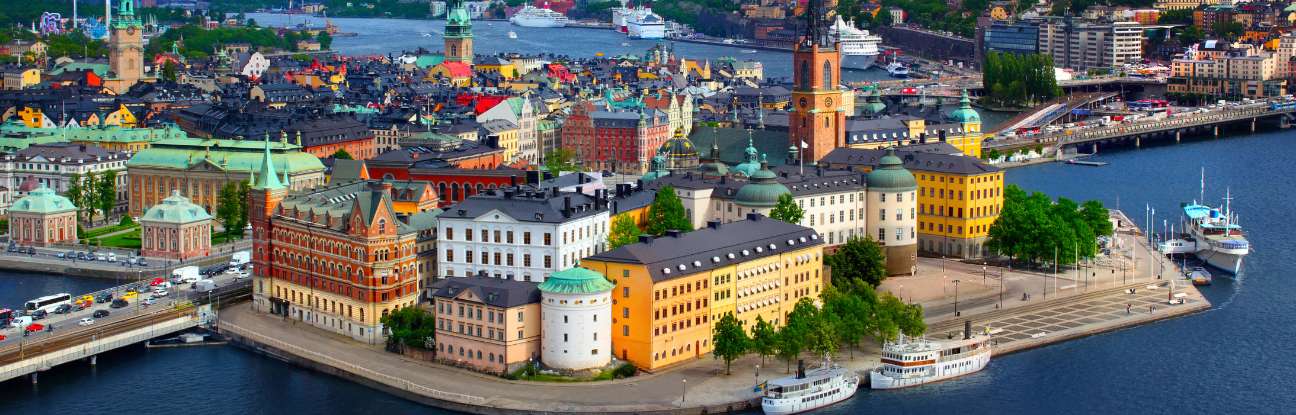
Sweden, with its capital in Stockholm, is a Nordic nation known for its rich cultural heritage, innovative spirit, and stunning natural landscapes. The official language, Swedish, is widely spoken across the country, serving as the primary medium of communication, commerce, and education. As of 2022, Sweden is home to an estimated population of approximately 10.5 million people, predominantly consisting of ethnic Swedes, although there are significant minority groups such as Finns, Sami people, and immigrants from various backgrounds contributing to the nation's diversity. Despite its relatively modest population growth rate of around 0.6% in 2021, Sweden encompasses a vast area of approximately 450,295 square kilometres. Geographically, it is strategically positioned in Northern Europe, bordered by Norway, Finland, and the Baltic Sea, with maritime borders extending to several other countries. The currency used is the Swedish Krona, and Sweden's economic and social landscape is characterized by stability, innovation, and a commitment to sustainability.
Economic Overview
Following a projected 0.5% contraction in 2023, Sweden's GDP is expected to rebound by 0.9% in 2024 and further increase by 2.6% in 2025. However, persistent inflationary pressures are anticipated, impacting households' real disposable income and private investment. Factors like elevated construction costs and reduced demand for manufactured goods contribute to this trend. Despite challenges, private consumption is forecasted to gradually recover in early 2024 as real incomes improve. Monetary policy is likely to remain restrictive until inflation shows signs of improvement, while continued fiscal discipline is essential to combat inflation and maintain fiscal flexibility. Tax reforms, including adjustments to property taxes and phasing out mortgage interest deductions, are proposed to enhance tax efficiency and fairness. Additionally, priority reforms aim to loosen rent controls, promote equal opportunities in education, and integrate marginalized groups into the labour market. Economic activity faced setbacks, with a 0.8% decline in the second quarter driven by decreases in exports and investments. Third-quarter data suggests stagnant output, with household consumption and GDP indicators showing further deterioration. Challenges persist in the housing sector, and confidence levels among households and businesses remain low. The labour market faces difficulties, with declining employment rates and increased unemployment registrations. Inflation rates remained steady, and the Swedish krona experienced significant depreciation against the euro.
Bilateral Relations between India-Sweden
India and Sweden have established strong partnerships in science, technology, and innovation, with organizations such as the Departments of Science & Technology (DST) and Biotechnology (DBT) collaborating with Sweden's Vinnova agency. Together, they focus on various areas including Smart Cities, AI, energy research, healthcare, and space exploration. These collaborations are reinforced by numerous MoUs and bilateral agreements covering sectors like renewable energy and defence. The 19th session of the Indo-Swedish Joint Commission for Economic, Industrial, and Scientific Corporation in 2019 exemplifies the commitment of both nations to deepen their economic and scientific ties, showcasing a shared dedication to advancing research and innovation for mutual benefit and global progress.
Taxation
In Sweden, individuals are subject to local taxes on their income, ranging from 28.98% to 35.15%, with an average rate of 32.34%. Additionally, a 20% state tax applies to those surpassing a specified income threshold, alongside capital gains taxed at around 30% and property sale profits at 22%. Notably, inheritance and wealth taxes were abolished in 2005 and 2007, respectively. Corporate income tax stands at 20.6%, gradually reduced from 28% since 2009. Value-added tax (VAT) at 25% is common, with reduced rates for select goods and services. Sweden's tax-funded infrastructure, accounting for 41.4% of GDP, supports its welfare system, ensuring equal access to public services for all residents. The Swedish Tax Agency, responsible for tax collection and civil registration, is integral to maintaining this system.
Financing Business in Sweden
In Sweden, businesses have access to a diverse range of financing options to support their growth and development. Traditional bank loans, offered by leading banks such as Swedbank, SEB, and Nordea, provide avenues for working capital, equipment financing, and real estate loans. Government grants and subsidies, administered through organizations like Vinnova and Almi, promote innovation, research, sustainability, and internationalization. A robust venture capital ecosystem, with firms like Northzone and Creandum, supports early-stage and growth-stage companies, while angel investors and crowdfunding platforms offer additional avenues for funding. Furthermore, business incubators and accelerators like STING and LEAD provide funding, mentorship, and resources to nurture start-ups and facilitate their expansion. Overall, these diverse financing mechanisms contribute to fostering entrepreneurship and driving economic growth in Sweden.
Top 10 Companies in Sweden – 2023
| Rank |
Company |
Industry |
Revenue in 2023 (USD) |
| 1 |
Volvo Group |
Manufacturing |
$ 52.49 B |
| 2 |
Volvo Cars |
Automotive Manufacturing |
$ 37.94 B |
| 3 |
Ericsson |
Telecommunication |
$ 25.01 B |
| 4 |
H&M |
Retail |
$ 22.10 B |
| 5 |
Atlas Copco |
Manufacturing |
$ 16.38 B |
| 6 |
Skanska |
Construction |
$ 15.86 B |
| 7 |
Securitas |
Security Services |
$ 14.65 B |
| 8 |
Spotify |
Technology |
$ 14.37 B |
| 9 |
Sandvik |
Engineering |
$ 12.00 B |
| 10 |
Autoliv |
Automotive Manufacturing |
$ 10.47 B |
Business Clusters in Sweden
- Stockholm Tech Cluster: Stockholm is a renowned hub for tech innovation, housing start-ups, giants like Spotify, and leading research institutions.
- Medicon Valley: Spanning Sweden and Denmark, Medicon Valley is a prominent life sciences hub fostering collaboration in pharmaceuticals and biotechnology.
- Gothenburg Automotive Cluster: Gothenburg hosts Volvo and a vibrant automotive industry focused on sustainable mobility and advanced safety tech.
- Swedish Fashion District: Stockholm's fashion hub promotes sustainability and innovation, supporting emerging designers and established brands.
- Sustainable Energy Cluster: Sweden leads in renewable energy with clusters driving wind, solar, and bioenergy solutions.
- ICT and Telecommunications Cluster: Ericsson leads Sweden's ICT sector, known for mobile technology and digital transformation solutions.
- Cleantech Cluster: Sweden's commitment to sustainability is reflected in its cleantech cluster, focusing on renewable energy and environmental solutions.
- Maritime Cluster: Sweden's strategic location drives a thriving maritime industry focusing on sustainable shipping practices and digitalization.
- Creative Industries Cluster: Creative hubs in Stockholm, Gothenburg, and Malmö foster innovation in design, film, gaming, and advertising.
- Healthtech Cluster: Sweden's healthtech and life sciences sector leads in medical technology and healthcare innovation, supported by research institutions and hospitals.
Starting a Business in Sweden
Starting a business in Sweden involves several key steps. First, you must choose the right legal structure, such as a sole trader, limited company, partnership, limited partnership, or branch of a foreign company. Each structure has specific requirements and responsibilities. Next, you need to select a business name and register it with the Swedish Companies Registration Office, along with registering with the Swedish Tax Agency. Securing funding is essential, with options including private investors and government programs like the Almi program. Setting up a business bank account follows, with considerations for both residents and non-residents. Finally, registering for taxes with the Swedish Tax Agency is necessary, ensuring compliance with tax regulations. Navigating these steps sets the foundation for success in Sweden's dynamic business landscape.
Best Locations to Set-Up Business in Sweden
- Stockholm: Sweden's capital and economic hub, offering access to skilled talent, diverse industries, and a robust start-up ecosystem.
- Gothenburg: Major industrial and shipping centre on the west coast, ideal for manufacturing, logistics, and maritime businesses, with a thriving tech scene.
- Malmö: Southern city near Denmark, known for innovation and sustainability focus, attractive for start-ups and tech firms.
- Lund: Home to a prestigious university and research institutions, a hub for biotech, life sciences, and technology companies.
- Uppsala: Academic and research hub with a focus on life sciences, pharmaceuticals, and biotech, appealing to innovative enterprises.
- Linköping: Strong aerospace and defence industry presence, supportive of start-ups and tech-driven ventures.
- Örebro: Central city with a diverse economy, offering skilled labour and access to research facilities.
- Västerås: Near Stockholm, known for energy, engineering, and manufacturing industries, home to multinational corporations.
- Helsingborg: Vital transportation and logistics hub, favourable for shipping, distribution, and trade businesses.
- Gävle: Eastern city with a thriving port and industrial sectors like forestry, paper, and manufacturing.
- Karlstad: Central city with a strong service sector, high quality of life, and strategic connectivity.
- Jönköping: Southern city with an entrepreneurial environment, hosting international trade fairs and attracting diverse industries.
Visa and Immigration
- Business Visa: Suitable for short-term visits like meetings or conferences, allowing stays up to 90 days within a 180-day period.
- Work Visa: For long-term work, either as an employee or self-employed, offering the opportunity to live and work in Sweden.
- Start-up Visa: Tailored for entrepreneurs establishing innovative businesses, providing support and resources for start-up ventures.
- Residence Permit for Self-Employed: For self-employed individuals managing businesses in Sweden, requiring proof of financial viability.
- Investor Visa: For investors investing in Swedish businesses or start-ups, contributing to the economy while residing in Sweden.
In summary, Sweden offers a lucrative market for businesses looking to expand, characterized by innovation, a tech-savvy population, and a strong emphasis on sustainability. However, challenges such as intense competition and complex regulations require careful consideration. To succeed, businesses must conduct thorough research, develop localized strategies, and prioritize compliance. With the right approach, Sweden's dynamic market presents significant opportunities for growth and long-term success.To know more about the Swedish market, request a Free Detailed Sweden Market Entry Report.
 Thank you for getting in touch!